





























FHR: Frontal Head Restraint
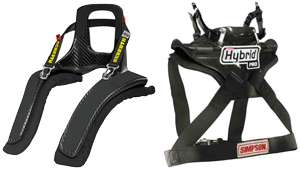 The most well-known Frontal Head Restraint systems in motorsport are the HANS system (Head And Neck Support) and the Hybrid. Both systems are developed to prevent head and neck injuries during a crash.
Of these two systems, the HANS system has the longest history. This system has been on the market since 1990 (albeit in a much less developed form), but became known to the general public since it was made mandatory in Formula 1 in the 2003 season.
Preventing injuries
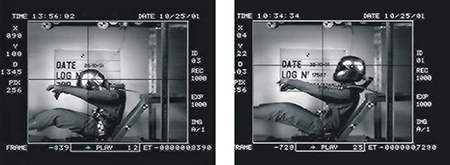 The basic idea behind an FHR system is simple: the body of a driver is strapped into his or her vehicle and generally remains well protected in an accident. However, the (relatively heavy) head is only restrained by the neck and shoulder muscles of the driver, which in certain cases can result in severe (even fatal) head and neck injuries after a crash.
By using an FHR system, which sits under the belt and is connected to the helmet, a 'connection' is made between the body and the head of the driver. In a crash, the head can thus only move to a limited extent, thereby preventing injuries.
We briefly explain the difference between the HANS and Hybrid systems below:
 HANS
HANS
- Works only during frontal impacts
- A different system for each seating angle
- Runs over the collarbone, which may feel slightly less comfortable
- Can always remain connected to the helmet
Hybrid
- Works during impacts from all angles, 360° around
- One system for all seating angles
- Sits behind the neck, making it virtually unnoticeable to wear
- Must be disconnected from the helmet when putting on and taking off
Both the HANS system and the Hybrid are available in PVC and carbon versions. Carbon is much lighter and thus offers more comfort and is stronger in the event of an impact.
The HANS system is available in different degrees.
The number of degrees to be used depends on the seating position in the vehicle:
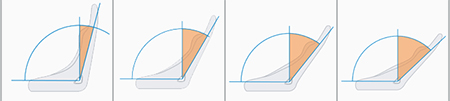
- 10 degrees: for an (extremely) upright seating position.
- 20 degrees: for a normal seating position in touring cars and GTs (the most used system).
- 30 degrees: for a normal seating position in Formula cars and sports cars/prototypes.
- 40 degrees: for an extremely reclined position, such as Formula 1 and certain sports cars/prototypes.
The HANS system and the Hybrid are available in different sizes. For the HANS system, this size depends on the neck circumference. For the Hybrid, the size depends on the chest circumference.
View our offer: Motorsport FHR systems
Note! This manual takes into account the basic regulations as determined by the FIA.
Always check the regulations of the organization/event you wish to participate in for any deviations.